
The short answer
Worn suspension bushings announce themselves with clunking over bumps, vague or wandering steering, vibration and uneven tyre wear. Worn stabiliser bar bushings add knocking or rattling when turning and more body roll in corners. A workshop confirms the diagnosis by looking for torn or separated rubber and by checking for play with a lever or wheel play detectors.
What a bushing does
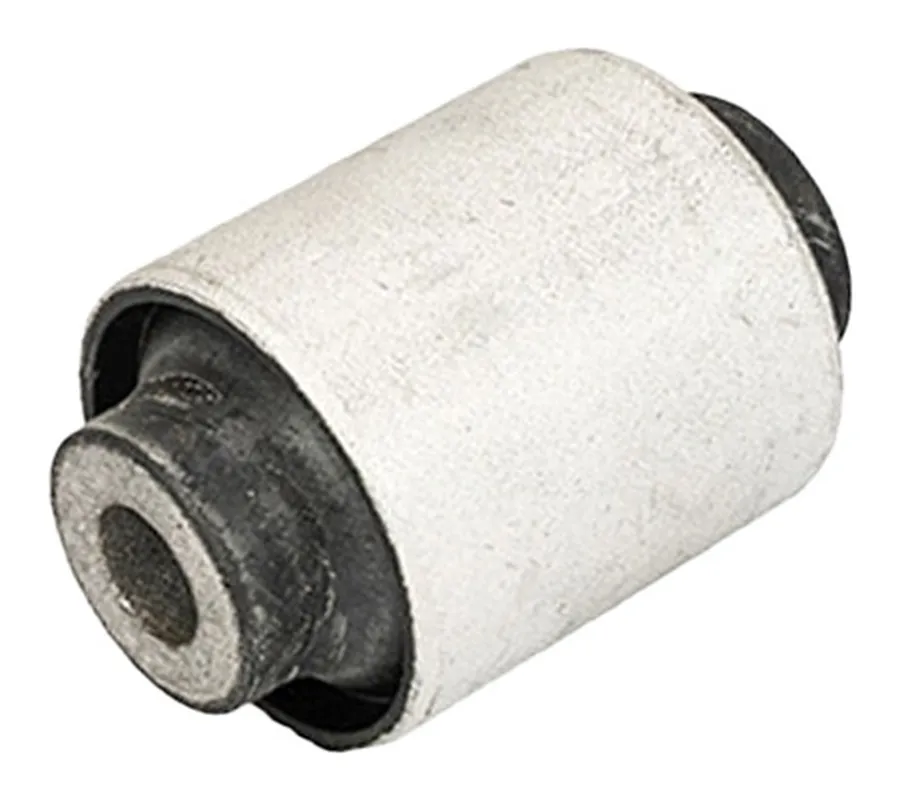
A bushing is a vibration isolator: an interface between two parts that damps the energy passing through it. In a car it is usually a ring of rubber inside a metal outer tube, often with an inner metal tube that protects the rubber from being crushed by the fixing bolt.
Bushings connect moving parts such as control arms and stabiliser bars to the body or subframe and isolate these parts from each other. They reduce the transmission of vibration and shock from the road, which is what ride comfort and low noise depend on. The stabiliser bar, or anti-roll bar, reduces body roll in corners; flexible bushings attach it to the chassis, and a link with a flexible joint connects each end to the suspension.
Signs of worn control arm bushings
| Sign | What is happening |
|---|---|
| Clunking or knocking over bumps | The arm moves in a bushing that no longer holds it |
| Pulling, wandering or unstable steering | The wheel is no longer held in position |
| Vibration and a rougher ride | The rubber no longer isolates road shock |
| Uneven tyre wear | Excessive suspension movement upsets the wheel alignment |
Signs of worn stabiliser bar bushings
- Clunking or knocking from the suspension when turning or crossing uneven ground.
- Rattling over bumps as the bar develops play in its mountings.
- More body roll in corners, because the bar no longer acts firmly on the body.
- Steering that feels less precise and reacts more to road imperfections.
Rubber bushings deteriorate with age, road salt, heat cycling that dries the rubber and makes it brittle, and the mechanical stress of potholes and rough roads.
What a workshop checks
A technician inspects the bushings and the related suspension parts for torn or separated rubber, deformation and movement outside acceptable limits, and consults the vehicle’s service information, because the limits differ from model to model. One worn part does not explain every symptom, so the control arm itself, the ball joints, the steering, the tyres and the wheel bearings are checked at the same time.
Roadworthiness tests judge bushings in the same way. The United Kingdom’s MOT inspection manual, for example, has the tester assess wear or play in suspension pins and bushes with a small lever or with wheel play detectors, and lists these defects:
| Defect | Category |
|---|---|
| A suspension pin, bush, joint or bearing excessively worn | Major |
| A suspension pin, bush, joint or bearing likely to become detached | Dangerous |
Choosing the replacement
Identify the vehicle, the axle and the position of the bushing on the arm (front or rear eye, left or right side), and note the OE reference number. Stabiliser bar bushings must match the diameter of the bar, which can differ between versions of the same model. Trade customers can request the matching DYNTEK reference and OE cross-references by email.
Related products: control and trailing arm mountings, stabiliser bar bushings and the other suspension bushings and mountings.