
The short answer
A worn engine mounting shows itself as more vibration in the cabin, a clunk or knock when load changes, and an engine that visibly rocks when it is started or switched off. On the part itself the rubber is cracked, split or separated from the metal. A mounting in that state is replaced; it cannot be repaired.
What an engine mounting does
An engine mounting secures the engine to the body or subframe and, at the same time, isolates the vibration the engine produces. Rubber bonded to metal is the usual construction: the metal parts carry the load and locate the engine, and the rubber absorbs the dynamic forces so that they are not passed into the structure. Rubber is used because it damps well, resists corrosion and lasts.
The same design aims apply to every rubber-metal part: vibration isolation, shock absorption, noise reduction and durability under dynamic loads.
Signs that it is worn
| Sign | What is happening |
|---|---|
| Noticeably more vibration through the steering wheel, seats, floor or pedals, most of all at idle | The rubber has deteriorated and no longer absorbs the engine’s forces |
| Rattling, clunking or knocking from the engine bay when pulling away, changing gear or lifting off | The engine moves too far and its movement is no longer cushioned |
| A single clunk when shifting between drive and reverse | The engine rocks against a collapsed or torn mounting |
| The engine visibly lurches or rocks on start-up or shutdown | The mounting no longer restrains the engine |
| Cracking, splitting or dry rot in the rubber, or rubber separated from the metal | The part has reached the end of its life |
| Harsh gear changes and a generally rougher feel | Engine and gearbox are no longer held in position under load |
What ages the rubber
Age is the main cause: years of heat, cold and ozone make the rubber brittle until it cracks. Heat radiated by the engine and the exhaust speeds this up. Leaks matter as well, because engine oil, transmission fluid and coolant attack rubber; a mounting that sits under an oil leak fails early. Repeated acceleration and deceleration load the bond between rubber and metal, and an impact or an incorrect installation can damage a mounting that was otherwise sound.
What a workshop checks
- A visual inspection of every mounting for cracked or separated rubber, rust stains and oil residue.
- With the brake applied, a shift from park or neutral into drive and reverse while listening for clunks.
- Engine movement while an assistant raises the engine speed: a sound mounting allows little movement, a failed one lets the engine rock visibly.
- The surrounding area for oil or fluid leaks, which have to be repaired or the new mounting will fail in the same way.
The mountings of the engine and gearbox work together, so all of them are inspected at the same time.
Choosing the replacement
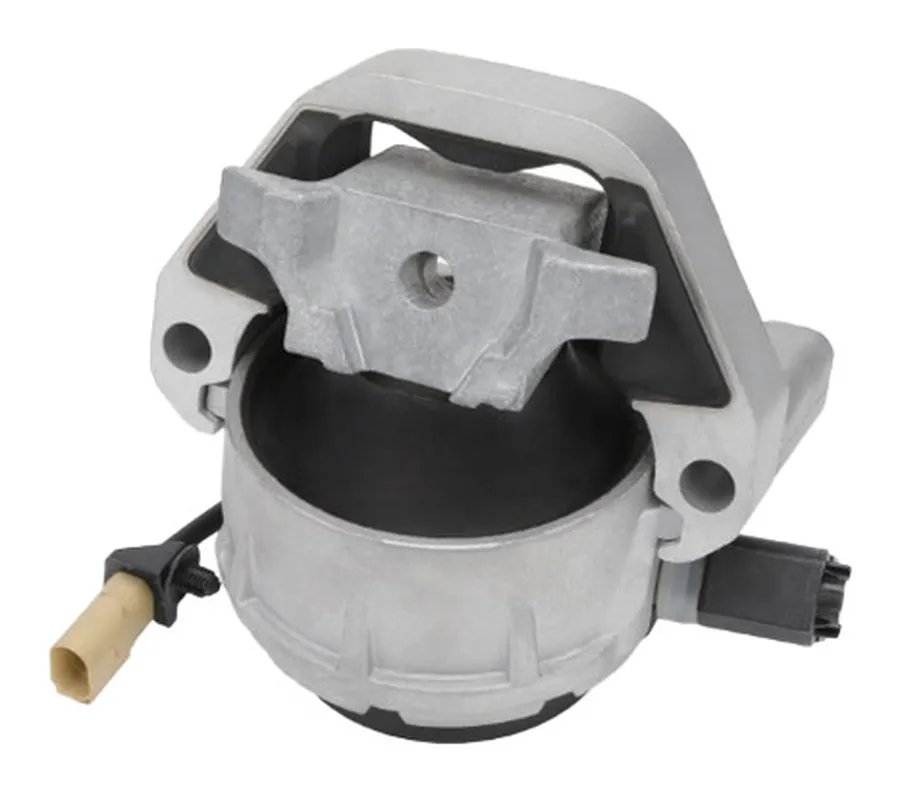
Identify the vehicle, the engine and the position of the mounting (left, right, front, rear or gearbox side), and note the OE reference number on the part being removed. Some vehicles use mountings with an electrical connection, which must be replaced like for like. Trade customers can request the matching DYNTEK reference and OE cross-references by email.
Related products: engine mountings, transfer case mountings and the other engine and driveline mountings.